The guide · written from a real, measured fast
24 Hour Fast and 48 Hour Fast. What 1 and 2 Days of Water Fasting Really Do
Most pages about a 24 hour fast or a 48 hour fast are written from theory. This one is written from the first two mornings of a doctor supervised 90 day water fast that is still running as you read this. John, 56, weighed in on the same scale and dipped a ketone strip every single morning. The 24 hour mark and the 48 hour mark are two of those mornings, photographed, with his own words attached.
What a 24 hour fast and a 48 hour fast are
One full day with water only. Or two full days. No food, no juice, no broth, no milk in the coffee. John drinks plain water plus Celtic salt and electrolytes on his doctor’s say so, which is his choice rather than a recommendation.
Counting is where people get confused. Here is the way this site counts. Day 1 is the first morning without breakfast. The morning of day 2 is the 24 hour mark. The morning of day 3 is the 48 hour mark. If you count forward from your last meal instead, you land in the same place with different labels. Pick one way, say which one you picked and stay consistent.
The two days in one sentence. The scale gives you its biggest numbers of the whole fast in these 48 hours and gives you almost no fat for them. The real payoff sits on the far side of a day you have not met yet.
How the hours actually run
- HOUR 0 TO 12Nothing happens yet
The body is still digesting the last meal and then leaning on glycogen, the carbohydrate stored in the liver and muscles. Energy is normal. Hunger arrives on schedule at your usual meal times because your body expects food then. This part is mostly a habit problem.
- HOUR 12 TO 24 · 224.2 LBThe glycogen drain and the big scale drop
Liver glycogen runs low. Every gram of it is stored with about three grams of water and the two leave together. That is the whole trick behind the number you see on the second morning. John woke up 4.4 pounds lighter. His words were that there is a low hum of hunger in the background but nothing he has not sat through before. Strip blank.
- HOUR 24 TO 48The fuel switch begins
With glycogen mostly spent the body starts pulling fat out of storage and the liver starts making ketones. Hunger comes in waves rather than a rising line. Headaches and lightheadedness show up here for a lot of people, which is the sodium and fluid side of the fast more than the food side.
- HOUR 48 · 220.6 LBThe 48 hour mark
Two full days done and 8.0 pounds off the scale. The strip is still blank. This is the morning a 48 hour fast is measured on. For most people it is the finish line.
- HOUR 48 TO 72The day you skip by stopping at 48
John's hardest day of the entire first week started right after his 48 hour weigh in. Sluggish, low on energy, a little anxious, his body stressed and he could feel it. Anyone stopping at two days walks away before this. Anyone going to three walks straight into it. Worth knowing which one you signed up for. The day 3 note is here.
John’s 24 and 48 hour marks, on the same scale
All weights are first thing in the morning on the same bathroom scale. The ketone number is the keto mojo urine strip matched against the chart on the bottle, where 0 is blank and 16 is the darkest square.
| Morning | Weight | Change | Total | Ketone strip | His words |
|---|---|---|---|---|---|
| Day 1 start · Aug 1 | 228.6 lb | start | 0 | 0 | The toast that starts it all |
| Day 2 24 hours | 224.2 lb | −4.4 | −4.4 | 0 | Down 4.4 pounds in 24 hours |
| Day 3 48 hours | 220.6 lb | −3.6 | −8.0 | 0 | Down 8 pounds and the first tough day |
| Day 4 72 hours, for scale | 218.0 lb | −2.6 | −10.6 | 5 | The edge comes off. 218 and energy is back |
SWIPE THE TABLE SIDEWAYS FOR ALL COLUMNS →
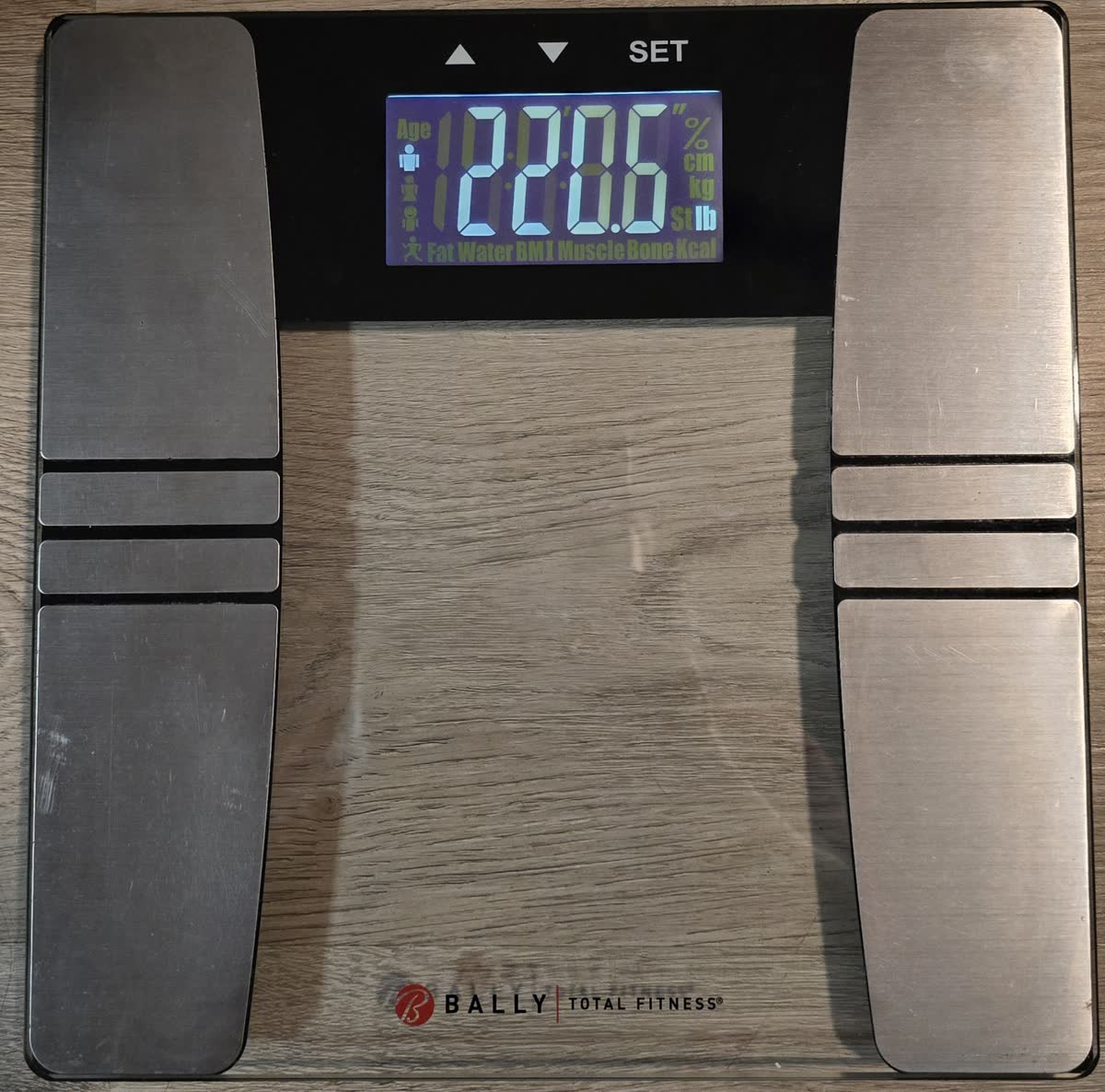
Eight pounds off in two days.
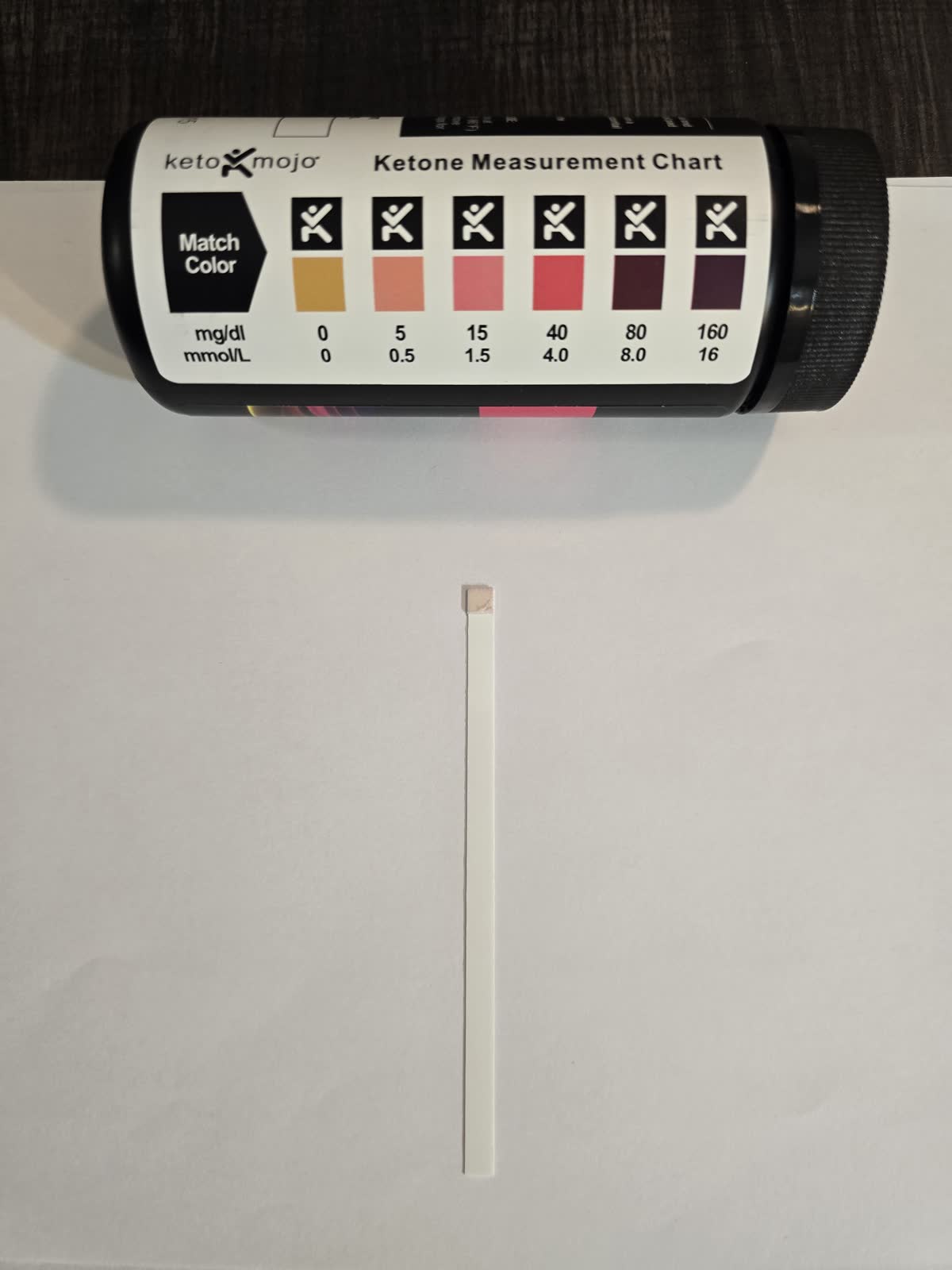
Still blank. That is normal.
The two photos above are the honest summary of a 48 hour fast. A scale that moved a lot and a strip that has not moved at all.
What that early weight is made of
Be honest with yourself about the number. Glycogen is stored with roughly three grams of water per gram of carbohydrate. Burning through it in the first day or two sends that water out with it, which is why the scale falls faster in these 48 hours than it ever will again. John said it out loud on his own day 2 video, before anyone could accuse him of hiding it. The published reviews of prolonged fasting describe the same curve, a steep early drop that settles into a slower steady loss.
Here is the proof from his own record. The first night gave up 4.4 pounds. The second gave up 3.6. By his fourth week the mornings were running under a pound and two of them went the other way entirely. Nobody keeps losing four pounds a night. Anyone selling you that is selling.
His home scale also reports body fat and it read 42.3 percent on day 1, 41.1 at the 24 hour mark and 40.1 at 48 hours. Do not read that as two points of fat burned in two days. A home impedance scale reads through body water and body water is exactly what is moving during these hours. Those estimates are worth watching over weeks, not over a weekend.
The strip stays blank and that is normal
This is the single most useful thing on this page for a two day faster. John’s urine ketone strip read blank at 24 hours, blank at 48 hours and blank again on the morning of day 3. The first trace showed on the morning of day 4 and he only called himself officially in ketosis on day 5.
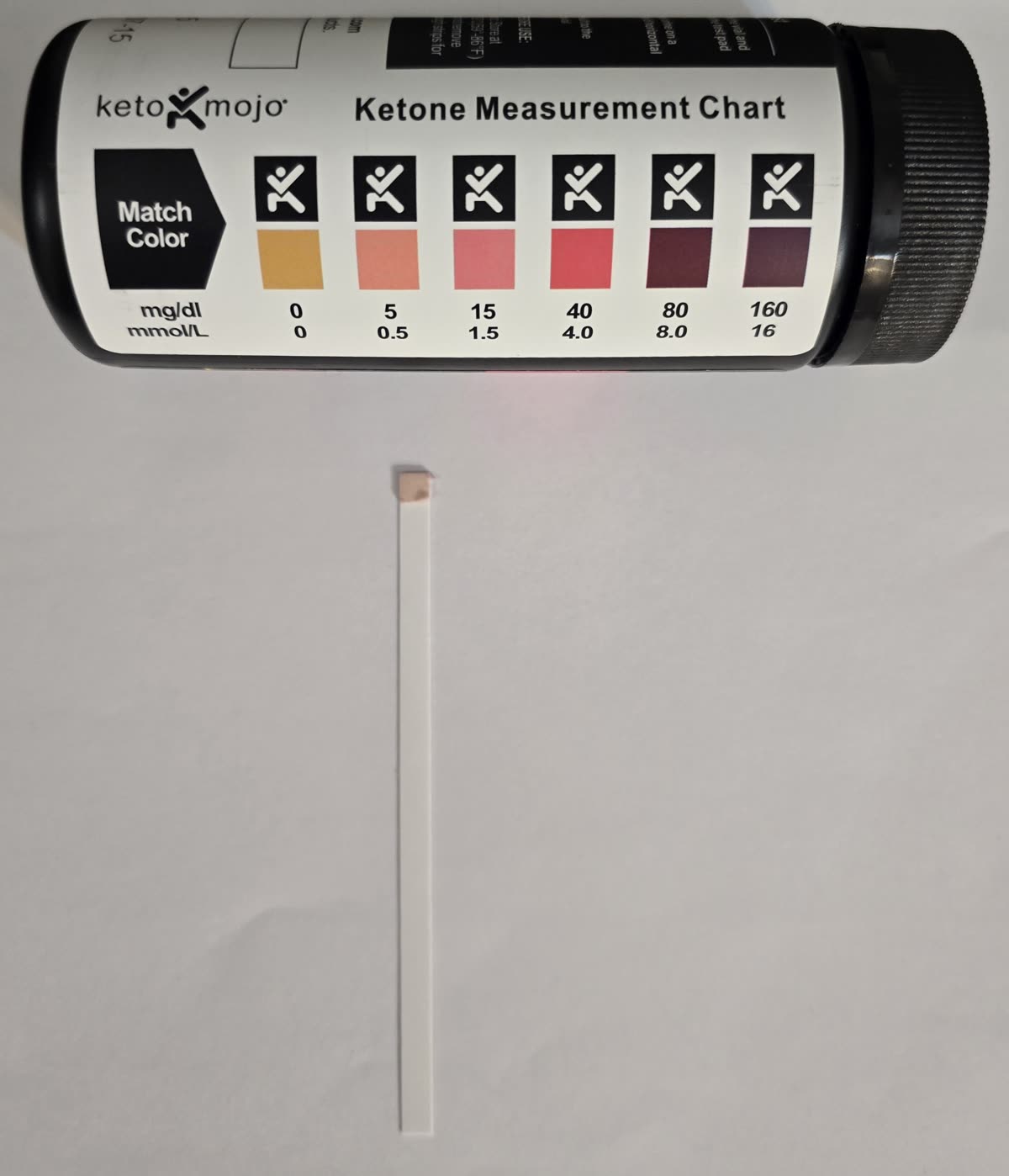
The first trace, a 5 on the chart.
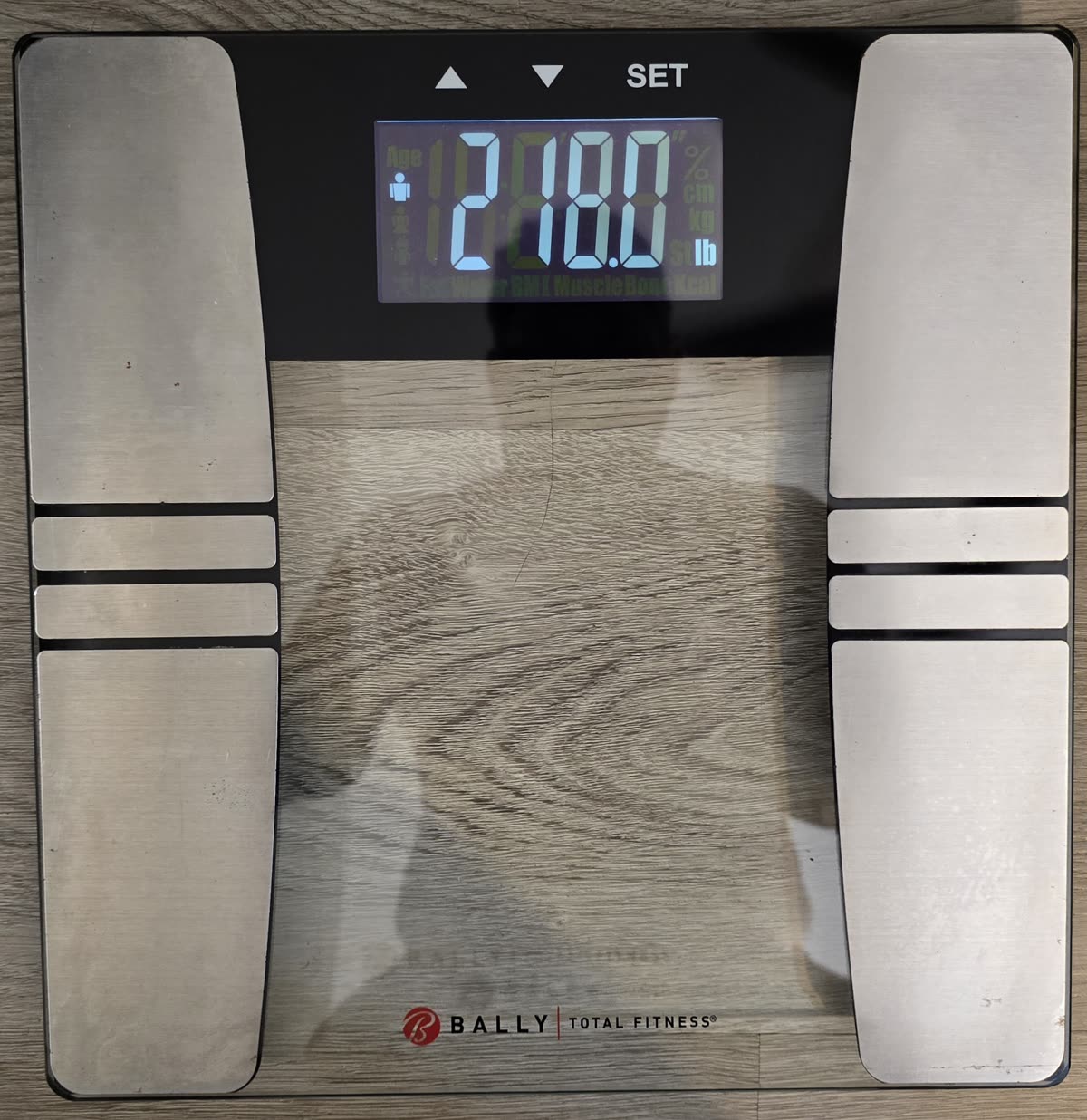
Where a 48 hour fast would have missed the turn.
Plenty of pages will tell you that you are in ketosis at hour 24 and that cellular cleanup peaks at some tidy number on a chart. Nobody dipping a strip at home can confirm any of it and this project will not pretend otherwise. What can be shown is the strip. And the strip says the visible switch happened on day 4 for a 56 year old man doing this under supervision. Urine strips measure what a body spills rather than what it makes. They lag behind. Treat a blank strip at 48 hours as bad instrumentation, not a failed fast.
What 24 and 48 hours actually give you
- A real scale move. 4.4 pounds at one day, 8.0 at two, on a real morning scale. Mostly water, entirely measured.
- Proof that hunger passes. Hunger arrives in waves at meal times rather than climbing forever. Two days is long enough to watch a wave rise and go without being fed.
- A clean break from the habit loops. John's day 3 line was that his body wanted the cookies, the pizzas, the burgers. Those are habit loops firing, not a stomach asking for fuel. The difference gets obvious once you sit through a couple of them.
- A cheap trial run. If you are considering three days or more, two days tells you how your own body handles the switch while the exit is still easy.
What two days does not give you is the part people fast for. The energy came back for John on day 4. The appetite disappeared on day 7. His fasting glucose of 106 from the baseline panel, the reason this whole project exists, is a 90 day problem rather than a 48 hour one. Every lab number is on the bloodwork page.
What John does each day
His routine, not a plan for you.
- Water through the day, steady rather than forced.
- Celtic salt and electrolytes on the schedule his doctor approved.
- Walks only. No lifting, no running, no workouts.
- A morning weigh in on the same scale and a morning ketone strip, both photographed.
- Normal life otherwise. Work, TV, things around the house.
- The doctor has stop authority. If she says eat, he eats.
The warning signs he watches for are the ones every mainstream source on water fasting lists. Severe dizziness, a racing or irregular heartbeat, fainting, vomiting, confusion. Any of those ends the fast and starts a phone call rather than a push through.
Who should not do a 24 or 48 hour fast
- Anyone pregnant or breastfeeding.
- Anyone with diabetes or on blood sugar medication.
- Anyone with a heart condition, kidney disease or a history of an eating disorder.
- Anyone under 18.
- Anyone on daily medication that assumes food.
Two days is short enough that many healthy adults do it on their own. Short does not mean the list above bends. If you are on it, the answer is talk to your doctor rather than read another page.
How to stop at 24 or 48 hours
Small, simple and slow. After one or two days a healthy adult is not in refeeding danger the way a multi week faster is. The first plate still goes better modest than heroic, because the digestive system has been idle and will tell you about it.
Expect part of the number to come back and do not call that failure. It is the same water walking back in beside the carbohydrate. John got the extreme version of that lesson on day 30 of his long fast, when one small vegetable broth and a quarter of an avocado moved his scale 2.4 pounds in two mornings and dropped his ketone strip from 16 to 0.
A quarter of an avocado is not free. John, day 32, two mornings after breaking 30 days of water with a small broth and a quarter of an avocado.
If two days leaves you curious about the third, that is the exact question this whole site answers every morning. The 3 day water fast guide covers the day you would be walking into. The 7 day guide covers the week after that. Today’s number is on the daily notes page.
Two days is the shortest honest fast on this site. It is also the one where the scale lies the loudest.
Quick answers
How much weight do you lose on a 24 hour fast?
John lost 4.4 pounds in his first 24 hours, 228.6 down to 224.2 on the same bathroom scale. That is a big number for one day and it needs an honest reading. It is the single biggest overnight drop of his whole fast through day 38. It is also almost all water. The body stores carbohydrate as glycogen with roughly three grams of water for every gram of glycogen. Burn the glycogen and the water goes with it. A lighter person loses less. Some of it returns with the first meal.
How much weight do you lose on a 48 hour fast?
John was 8.0 pounds down at the 48 hour mark, 228.6 to 220.6. The second night gave up 3.6 pounds after the first gave up 4.4. Those two nights are the two biggest drops of his entire fast so far, which tells you what the early scale is measuring. His own words on that morning were that a lot of this early drop is water leaving with the stored glycogen. No, he did not burn 8 pounds of fat. The fat part is real but it is a fraction of the number.
Are you in ketosis after 24 or 48 hours of fasting?
The body starts making ketones long before a strip can see them. John dipped a urine strip every morning and it read blank at 24 hours and blank again at 48 hours. It stayed blank on the morning of day 3 too. The first trace, a 5 on the keto mojo chart, showed up on the morning of day 4. Urine strips measure the ketones a body spills, which lags behind the ketones it makes. A blank strip at 48 hours does not mean nothing is happening. It means the strip is the wrong instrument for that hour.
Is a 48 hour fast better than a 24 hour fast?
They are different jobs. One day proves you can skip food without the sky falling and it costs you almost nothing in recovery. Two days doubles the scale move and takes you deeper into the fuel switch, at the price of a rougher afternoon. What the second day does not do is get you to the payoff. In John's fast the energy and the appetite loss arrived on days 4 and 5, well past 48 hours. If you want the part people fast for, two days stops short. If you want a reset you can do on a weekend, two days is the sensible ceiling.
How do you break a 24 or 48 hour fast?
Small, simple and slow. After one or two days the body is not in the danger a multi week faster faces. A normal meal will not hurt a healthy adult. It will still feel better if the first plate is modest. John's own lesson came far later, on day 30, when one bowl of vegetable broth and a quarter of an avocado put 2.4 pounds back on the scale in two mornings and swept his ketone strip from 16 to 0. His words were that a quarter of an avocado is not free. Expect a chunk of your 24 or 48 hour number to come back the same way, because it is the same water.
Is a 48 hour fast safe?
For a healthy adult, two days without food is the range most medical overviews treat as short. That is not the same as risk free. The classic problems are lightheadedness, headaches and the electrolyte side of drinking a lot of plain water. Anyone pregnant, diabetic, on daily medication, under 18, with a heart or kidney condition or with a history of an eating disorder should not fast at all without a doctor. John is 56 and does everything under a doctor who has known him for years, with monthly bloodwork and stop authority. This site reports what he does. It does not tell you what to do.